
TLDR
Jaw clenching, morning stiffness, clicking, and tension headaches are early signals that your jaw muscles are working harder than they should. Intraoral and extraoral massage therapy targets the muscles around the temporomandibular joint to support comfort, reduce muscle tension, and improve jaw movement. If these signs are becoming part of your daily routine, a TMJ-focused massage appointment gives you a clear assessment and a personalized plan before symptoms limit your daily function.
───────────────────────────────────────────────────────────
Introduction
You wake up and your jaw already feels tight. By midday, a dull headache sits behind your temples. When you yawn or bite into something firm, there is a click. You assume it will pass. It usually does, until it does not.
These signals are easy to dismiss, but they often reflect what is happening in the muscles and joint responsible for nearly every movement your mouth makes. The temporomandibular joint (TMJ), where your lower jaw connects to your skull, depends on a coordinated group of muscles. When those muscles carry too much tension, the effects can spread further than the jaw itself.
This post walks you through the early warning signs of jaw tension, why they spread beyond the jaw, how intraoral and extraoral massage address the underlying muscle patterns, and what to expect when you seek support in Burlington.
What Are the Subtle TMJ Signs People Often Ignore?
Most people do not seek support for jaw tension at the early stage. The signs feel minor, so they get filed away as stress, bad sleep, or a stiff neck. Here is what to pay attention to before discomfort starts limiting daily life.
• Morning jaw stiffness or tooth pressure: Waking with a tired, achy jaw or the feeling that your teeth were pressed together all night is a common early indicator of nighttime clenching or bruxism.
• Clicking or popping: Uneven or audible movement when you open wide, chew, yawn, or speak suggests changes in how the joint and surrounding muscles are coordinating. According to the Mayo Clinic’s overview of TMJ disorders, clicking is common and does not always indicate a serious problem, though it should be reviewed if it is painful or paired with locking.
• Facial tightness: Tension around the cheeks, temples, ears, or under the jaw that builds through the day is often muscular in origin.
• Tension headaches: Headaches that grow during screen time, stress, or long periods of concentration frequently connect to jaw muscle overuse.
• Neck and shoulder tightness: The muscles of the jaw and neck share functional connections. Persistent jaw clenching often pulls tension into the neck and upper shoulders as well.
None of these signs automatically point to something serious. But they are worth addressing before they start affecting eating, speaking, concentration, or sleep.
Why Does Jaw Clenching Affect More Than Your Jaw?
The jaw does not work in isolation. The masseter, temporalis, medial and lateral pterygoids, and the muscles of the neck all contribute to jaw movement. When any of these muscles hold excess tension, the whole system feels the load.
Repeated clenching raises the resting tone in these muscles, which increases pressure around the temporomandibular joint. Over time, that sustained pressure contributes to the symptoms patients notice: headaches, ear fullness, facial fatigue, sensitivity in the teeth, and reduced ability to open the mouth fully. The Ohio State University Wexner Medical Center’s TMD clinical guideline identifies muscle hyperactivity as a central factor in temporomandibular dysfunction.
Jaw muscle release for TMJ, as part of a structured massage plan, addresses those overactive muscles directly. The goal is to reduce muscle guarding, restore more comfortable joint mechanics, and help you become more aware of clenching patterns so you hold less tension through the day.
If you are also experiencing neck-related discomfort alongside your jaw tension, our massage therapy services address both areas as part of a connected plan.
What Is Intraoral Massage for TMJ and Why Does It Matter?
Intraoral massage for TMJ involves careful, gloved work inside the mouth to access deeper jaw muscles that are difficult to reach from the outside. These muscles, including the pterygoids and deeper portions of the cheek musculature, play a significant role in jaw clenching, grinding, and restricted opening.
A session begins with a thorough explanation of what the work involves, a clear consent process, and ongoing communication about pressure and comfort. Your therapist works with your feedback throughout, and the pace is entirely guided by what feels appropriate for you.
This approach supports reduced muscle guarding, greater awareness of how and when you clench, and improved ease of jaw movement. Research published in the NIH’s review of massage for temporomandibular disorders found that massage therapy, including intraoral techniques, showed positive effects on pain intensity and mouth opening in people with TMD.
Intraoral work is not suitable for everyone. It should always be discussed during your initial appointment so your therapist understands your history, comfort level, and goals before proceeding.
How Does Extraoral Massage Address Jaw Tension, Headaches, and Facial Tightness?
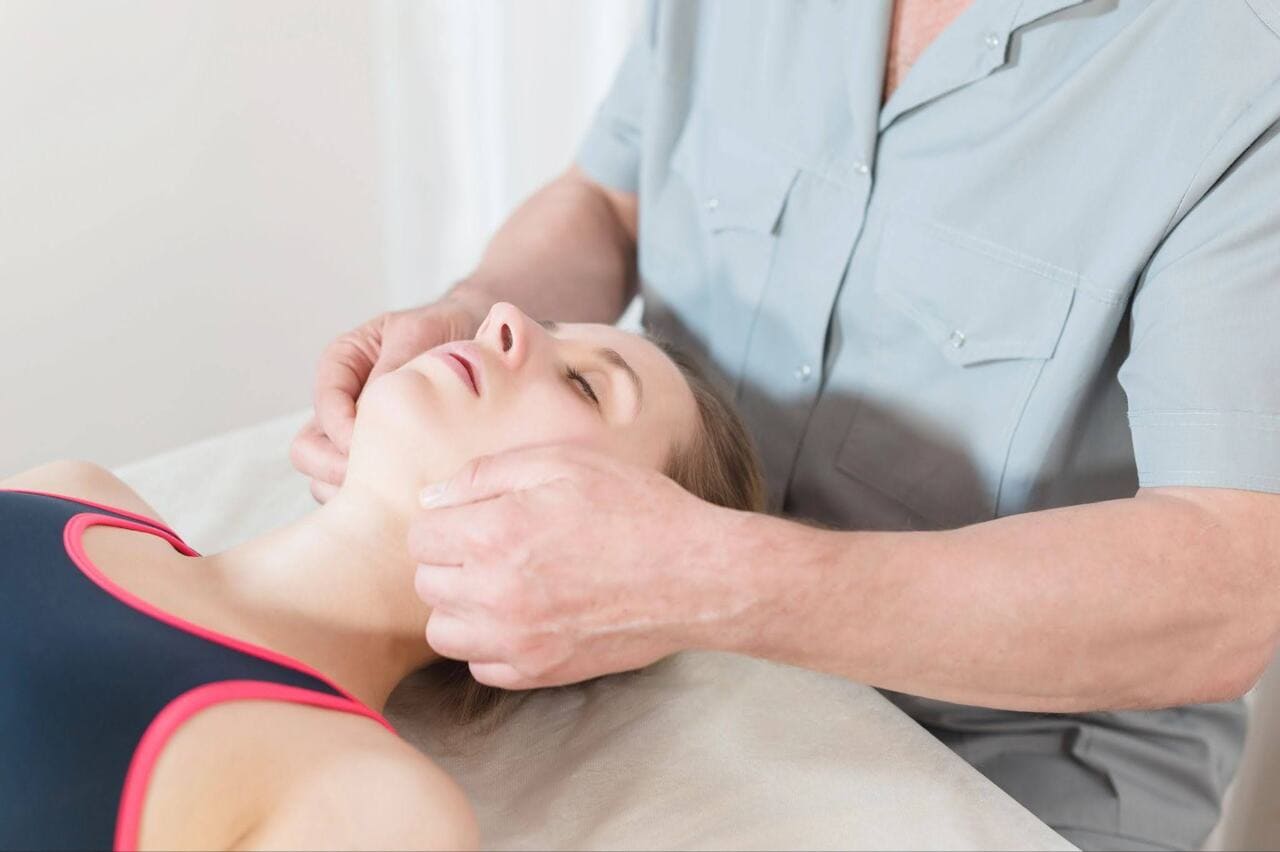
Extraoral massage for jaw tension addresses the muscles and connective tissue outside the mouth, including the cheeks, temples, jawline, neck, upper shoulders, and scalp. This is where most people first notice the effects of chronic clenching, and it is often where a treatment plan begins.
Areas Commonly Addressed
| Muscle or Region | Common Symptom Connection |
|---|---|
| Masseter | Jaw tightness, cheek aching, tooth pressure |
| Temporalis | Temple headaches, forehead tension |
| Suboccipitals | Base-of-skull tension, cervicogenic headaches |
| Neck and upper trapezius | Shoulder tightness, neck stiffness linked to jaw use |
| Scalp and facial fascia | Diffuse facial tension, pressure around the ears |
Massage for clicking jaw and facial tension through extraoral techniques supports the surrounding muscle environment rather than working on the joint directly. Clicking has multiple possible causes, and painful, worsening, or locking-related clicking should always be reviewed by a dental or medical professional.
Your care plan should also look beyond the treatment table. Posture during screen use, breathing patterns, stress-related clenching, chewing habits, and sleep position all influence jaw tension. Tracking jaw opening, headache frequency, and daily comfort over time gives you and your therapist a clear picture of how your body is responding.
For a broader look at how massage supports the body systematically, read about the benefits of massage therapy in Burlington and how they apply across different conditions.
When Should You Book Support Instead of Waiting It Out?
Jaw tension that resolves in a day or two after rest is usually not cause for concern. But some patterns are worth addressing sooner rather than later.
• Jaw stiffness or tightness that persists for more than a few days
• Frequent or unconscious clenching during work, exercise, or sleep
• Headaches that consistently appear alongside jaw use or stress
• Discomfort when chewing or speaking
• Reduced ability to open your mouth fully
• Repeated clicking that is new, worsening, or uncomfortable
Seek dental or medical input promptly if you notice jaw locking, significant trauma to the face or jaw, swelling, fever, unexplained tooth pain, numbness, or sudden severe pain. These require a different level of assessment before manual therapy is appropriate.
For those experiencing milder but persistent signs, TMJ massage therapy in Burlington offers a structured starting point: a clear assessment, education about what is contributing to your symptoms, and a plan built around your habits, goals, and comfort.
What Happens During a TMJ-Focused Massage Appointment?
Your first appointment begins with a conversation. Your therapist will ask about your symptoms, how long they have been present, your stress load, sleep quality, dental appliances, clenching habits, headache patterns, and any activities that seem to aggravate or ease the tension.
A movement check follows: how far you can open your mouth, side-to-side jaw motion, neck mobility, and areas of muscle tenderness. This gives your therapist a functional baseline to work from and track over time.
Your care plan may combine intraoral massage, extraoral massage, neck and shoulder work, posture and habit education, and home strategies to support what is done in the clinic. Progress is tracked through jaw opening measurements, symptom frequency, and how your daily function changes over time.
Some people notice a reduction in facial tightness or headache intensity after the first few sessions. Others need more consistent care and habit changes before seeing steady improvement. Your therapist should set honest expectations and adjust the plan based on how your body responds, not a fixed timeline.
Pressure, positioning, and the decision to include intraoral work are always discussed and adjusted based on your comfort. You are in control throughout.
Key Takeaways
• Morning jaw stiffness, clicking, facial tension, and tension headaches are early signs that jaw muscles are working harder than they should, and they are worth addressing before they limit daily function.
• The masseter, temporalis, pterygoids, and neck muscles all contribute to jaw movement; tension in one area frequently spreads to others, which is why jaw clenching often produces headaches, ear pressure, and neck tightness.
• Intraoral massage accesses deeper jaw muscles inside the mouth and should always involve informed consent, clear communication, and pressure adjusted to your comfort.
• Extraoral massage addresses the cheeks, temples, neck, and upper shoulders, and works best when paired with education about posture, breathing, and clenching habits.
• Research supports massage therapy as a helpful approach for reducing muscle tension and improving mouth opening in people with temporomandibular dysfunction, though it works most effectively as part of a personalized plan.
• Jaw locking, trauma, swelling, fever, numbness, or sudden severe pain should be assessed by a dental or medical professional before manual therapy begins.
Ready to Address Jaw Tension With a Clear Plan?
If jaw clenching, facial tightness, tension headaches, or a clicking jaw are becoming part of your daily routine, it is worth understanding what your body is telling you before symptoms affect eating, speaking, working, or sleeping.
Burlington Sports and Spine Clinic offers TMJ-focused massage appointments in Burlington with a careful assessment, clear education about what is contributing to your symptoms, and a personalized care plan designed to support jaw comfort, movement, and function over time.
Our goal is to help you move better, feel better, and get back to the activities you care about with more confidence and less tension holding you back.
Frequently Asked Questions
Is intraoral massage for TMJ uncomfortable?
It should not feel overwhelming. Your therapist explains the process before starting, uses gloves, and adjusts pressure based on your feedback throughout the session. If intraoral work is not appropriate for you, extraoral techniques addressing the cheeks, temples, neck, and jaw can still provide meaningful support for facial and jaw tension.
Can massage help with a clicking jaw?
Massage addresses the muscles around the jaw and reduces tension that contributes to discomfort and altered joint mechanics. Clicking has several possible causes, so if it is painful, getting worse, or associated with locking, a dental or medical review is the appropriate first step before starting manual therapy.
How many sessions are typically needed for jaw tension?
It depends on how long the issue has been present, your clenching habits, stress levels, posture, and sleep. A structured plan tracks progress through jaw opening, symptom frequency, and daily function, and adjusts care based on what is actually changing for you rather than a fixed number of visits.


