
TLDR
Pelvic floor exercises involve more than squeezing and holding; they require learning to activate, relax, and coordinate your pelvic floor muscles with breathing and movement. Recovery from chronic pelvic pain is non-linear, with progress happening in phases rather than a straight line. If generic Kegel instructions have not worked for you, a personalized physiotherapy assessment can help identify whether tension, weakness, coordination, or a combination of factors is contributing to your symptoms.
─────────────────────────────────────────
Introduction
You have tried the Kegels. You have counted the seconds, done the reps, and waited for something to change. But the accidental leaks when you laugh or cough are still happening. The pelvic heaviness is still there. And some days, the pain or pressure feels worse, not better. If this sounds familiar, you are not doing something wrong. You are simply working with incomplete information.
Pelvic floor exercises are not a single technique. They are a set of coordinated skills: learning to activate muscles, release them fully, breathe well, and transfer that control into real movement. For people living with chronic pelvic pain, the path forward is often more layered than a standard exercise handout suggests.
This post covers how the pelvic floor works, why generic Kegels often fall short, what a realistic recovery timeline looks like, and when working with a physiotherapist can give you clearer direction and steadier progress.
Why Do Generic Kegels Often Miss the Point?
The standard Kegel instruction, squeeze and hold for ten seconds, addresses one part of pelvic floor function and leaves out several others. According to MedlinePlus, pelvic floor muscle training involves learning to correctly identify and engage these muscles, which many people struggle to do without guidance.
Common errors include gripping the glutes, holding the breath, bearing down instead of lifting, and over-bracing the abdominals. These compensations feel like effort, but they do not produce the targeted muscular coordination the pelvic floor needs. Pelvic floor muscle activation and relaxation are two equally important skills. The ability to fully release a contraction matters as much as the ability to produce one.
Chronic pelvic pain adds another layer of complexity. Research published in the NIH database notes that pelvic floor dysfunction is not always a weakness problem. It often involves overactivity, sensitivity, poor coordination, or reduced endurance. Prescribing more repetitions to a pelvic floor that is already tense or irritated frequently makes symptoms worse rather than better.
How Do You Do Pelvic Floor Exercises Correctly?
Correct technique starts with finding the right sensation before increasing load or repetitions.
The Basic Activation Cue
Think of gently lifting and closing inward around the pelvic openings, as if you are trying to stop the flow of urine and resist passing gas at the same time. Then, without pushing down, allow a full release. The release phase deserves as much attention as the lift.
Breathing and Body Position
Coordinate your breathing with the movement. Inhale to allow the pelvic floor to soften and expand. Exhale to gently engage the lift. Your jaw, shoulders, glutes, and belly should stay relaxed throughout. Breath-holding is one of the most common signals that the effort level is too high for your current stage.
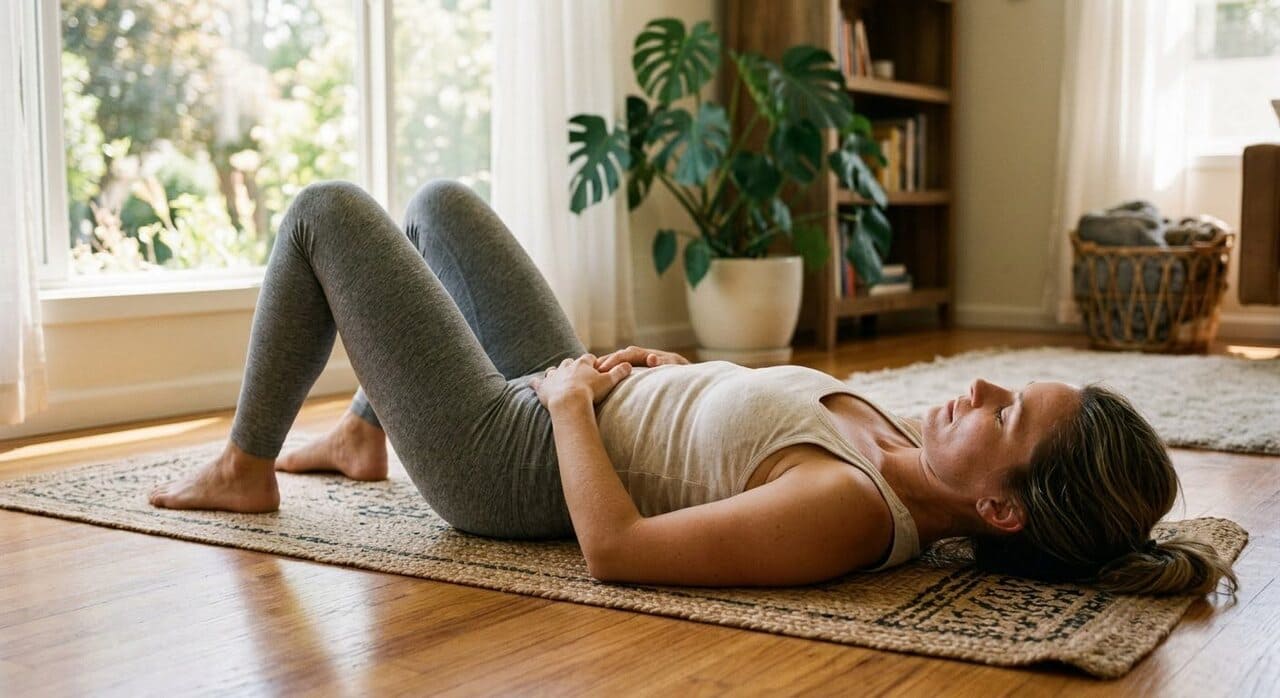
Good learning positions include lying on your back with knees bent, side-lying, sitting on a firm chair, and standing as tolerated. Starting in a position where gravity is not adding load gives you space to find the sensation without strain.
Types of Pelvic Floor Contractions
| Contraction Type | Purpose | Example Use |
|---|---|---|
| Quick flick | Builds reactive speed | Preparing for a cough or sneeze |
| Sustained hold (5 to 10 seconds) | Builds endurance | Standing, walking, or carrying |
| Full relaxation drill | Reduces tension and overactivity | Down-training for pain or heaviness |
If pain, pressure, heaviness, or leaking increases during or after any of these exercises, treat it as useful feedback rather than a reason to push through. Adjusting technique or load with professional guidance is the right next step.
What Does a Realistic Recovery Timeline for Chronic Pelvic Pain Look Like?
Recovery from chronic pelvic pain does not follow a straight or predictable path. Progress happens in phases, and flare-ups along the way do not mean you are back at square one. They provide information about pacing, load, and what your body needs next.
Early Phase: Awareness and Relaxation
The first priority is often reducing fear around movement and building basic coordination. This means learning to distinguish between tension and true engagement, practicing breathing mechanics, and letting the pelvic floor fully release between contractions. For many people with chronic pelvic pain, this phase takes longer than expected, and that is appropriate.
Middle Phase: Endurance and Functional Control
Once basic coordination improves, training shifts toward core stability and pelvic floor coordination during daily activities. This includes tasks like prolonged sitting, stairs, and light lifting, with attention to breathing and load management. Bladder control strategies often become more consistent during this phase as timing and anticipation improve.
Later Phase: Return to Higher Demands
The later phase involves progressively reintroducing activities like running, sport, and heavier lifting with controlled technique and appropriate pacing. The Mayo Clinic notes that regular and consistent practice is what produces functional improvement over time, rather than high-intensity short bursts.
Why Flare-Ups Happen
Flares are common and predictable triggers include stress, sleep disruption, hormonal shifts, constipation, prolonged sitting, and progressing exercise load too quickly. Recognizing these patterns helps you pace more effectively rather than interpreting a difficult week as failure.
How Do Pelvic Floor Exercises Support Bladder Control and Core Stability?
The pelvic floor does not work in isolation. It functions as part of a pressure management system that includes the diaphragm, deep abdominals, and hip and spinal stabilizers. When this system coordinates well, it distributes force through the trunk efficiently and reduces strain on pelvic structures during daily movement.
Bladder control specifically depends on timing. The pelvic floor needs to respond before a cough, laugh, lift, or jump to prevent leakage. This is a coordination skill, not only a strength one. Pelvic heaviness is often a sign that the current load, whether from fatigue, breath-holding, or prolonged standing, exceeds what the pelvic floor is managing at that moment.
Functional progressions that build this real-world coordination include:
• Sit-to-stand with breath timing
• Carrying groceries with core engagement
• Stair climbing with controlled pelvic floor activation
• Loaded squats with exhale on effort
• Impact preparation drills for return to running or sport
Long-term improvement in bladder control and organ support comes from integrating these skills into real movement, not from isolated floor work alone. If you are unsure where to start with functional training, our pelvic health physiotherapy service page outlines how a structured program is built from your current starting point.
When Does Physiotherapy for Pelvic Floor Weakness Make Sense?
Physiotherapy is appropriate when self-directed exercise is not producing clear improvement, when symptoms are inconsistent or worsening, or when you are unsure whether you are engaging the correct muscles. A physiotherapist assesses the full picture: your health history, breathing mechanics, movement patterns, core coordination, and how your pelvic floor responds to load.
Treatment is individualized because the underlying challenge varies. For some people, the priority is releasing tension and building awareness. For others, it is building strength, endurance, or return-to-activity confidence. A plan that accounts for your specific presentation moves you forward more efficiently than a generic protocol.
For people in Burlington who feel stuck with standard advice, a personalized assessment gives you a clear starting point and a progression built around your actual goals, whether that is lifting your children without leaking, returning to running, or simply moving through your day without pain or uncertainty. Progress varies between individuals, but the goal is always steady and measurable improvement toward the activities that matter to you.
Signs Your Pelvic Floor Exercise Plan Needs Adjusting
• Increased pelvic pain, heaviness, pressure, or leaking during or after exercises
• Difficulty fully relaxing after contractions, or a feeling of constant tension or gripping
• Consistent breath-holding, abdominal bracing, or bearing down during effort
• No noticeable change after weeks of consistent practice, especially if you are unsure you are engaging the correct muscles
• Fear of movement, avoidance of exercise, or uncertainty about returning to running, lifting, or physical activity
Key Takeaways
• Pelvic floor exercises involve activation, full relaxation, breathing coordination, and timing, not only the ability to hold a contraction.
• Chronic pelvic pain recovery is non-linear; flare-ups provide information about pacing and progression rather than signaling failure.
• Common technique errors like glute gripping, breath-holding, and bearing down reduce the effectiveness of pelvic floor training and may worsen symptoms.
• The pelvic floor works as part of a coordinated system with the diaphragm, deep abdominals, and hips; bladder control depends on timing within that system, not strength alone.
• Physiotherapy for pelvic floor weakness includes assessing tension, coordination, endurance, and movement strategy, not only muscle strength.
• If generic Kegel instructions have not produced improvement, a personalized physiotherapy assessment provides a clearer and more targeted path forward.
Ready to Move Forward With Clarity?
If pelvic floor exercises have felt confusing, inconsistent, or discouraging, you do not have to keep guessing. A physiotherapy assessment looks at how your pelvic floor, breath, core, hips, and movement patterns are working together, and builds a plan around what your body actually needs right now.
At Burlington Sports and Spine Clinic, we take a clear, personalized approach to pelvic floor rehabilitation. Whether your goal is better bladder control, reduced pelvic pain, or returning to running and lifting with confidence, we can help you build a plan that meets your body where it is today and progresses at a pace that makes sense for you.
Book a pelvic floor physiotherapy appointment in Burlington to get the assessment and direction you need.
Frequently Asked Questions
How do I know if I am doing pelvic floor exercises correctly?
You should feel a gentle internal lift and close, followed by a full release without pushing down. Your glutes, belly, and jaw should stay relaxed, and you should be breathing throughout the movement. If you are gripping, bearing down, or holding your breath, the technique needs adjustment. A physiotherapy assessment is the most reliable way to confirm you are coordinating the correct muscles.
Can pelvic floor exercises make chronic pelvic pain feel worse?
They can, particularly if the pelvic floor is already overactive, tense, or sensitive. In that situation, strengthening exercises add load to muscles that are not ready for it. Relaxation-focused work, breathing mechanics, and down-training strategies often need to come first before progressing to strengthening.
How long does it take to notice changes with pelvic floor exercises?
Timelines vary considerably depending on your starting point, the nature of your symptoms, and how consistent your practice is. Some people notice improved body awareness within a few weeks, while strength, endurance, bladder control, and return to activity often take longer. Progress is rarely linear, so tracking patterns over several weeks gives a more accurate picture than evaluating a single difficult day.


