
TLDR
A shockwave therapy session typically involves a short active treatment period where high-energy acoustic pulses are directed into the affected tissue, followed by several days of gradual tissue response that includes temporary soreness, sensitivity, and early remodeling signals. Discomfort during the session is common but monitored and adjustable. Understanding what happens in your tissue over the days following treatment helps you track your progress and prepare more effectively for each visit.
───────────────────────────────────────────
Introduction
If you have been dealing with persistent heel pain, Achilles tendon discomfort, or tendonitis that simply will not settle, the idea of trying something new can feel both hopeful and uncertain. Shockwave therapy comes up often as a non-invasive option, but for many people, the first question is not “will it work?” It is “what is actually going to happen to me in that room?”
That uncertainty is completely understandable. Knowing the step-by-step process, including how the session runs, what sensations are normal, and what your tissue is doing in the days that follow, makes the appointment feel far more manageable. This post walks you through the full experience: from setup and session length to the physiological timeline of tissue response over the first week after treatment.
It is worth noting upfront that individual responses vary. Shockwave therapy is typically one part of a broader plan that includes movement, load management, and strength work. What you read here is meant to inform and prepare you, not replace the guidance you receive from your clinician.
What Happens During Shockwave Therapy Sessions?
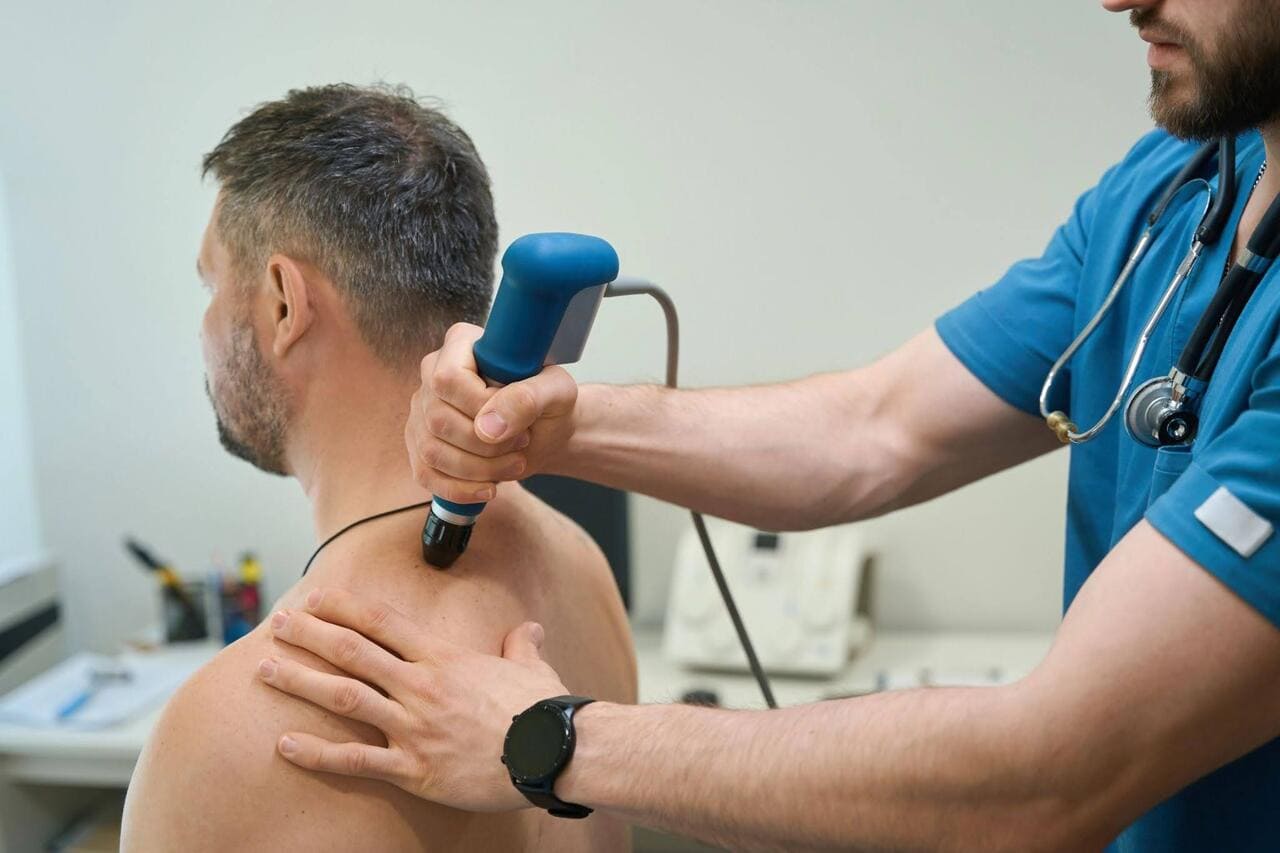
The session begins with a review of your assessment findings and a clear identification of the target area. Your clinician applies a conductive gel to the skin over the treatment site, positions the device, and begins at a low intensity before gradually adjusting based on your feedback and tissue response.
Shockwave therapy is a non-invasive approach that uses high-energy acoustic pulses directed into the involved tissue. These pulses travel through the skin and into the tendon, fascia, or other soft tissue structure being treated. You do not need an injection, incision, or sedation.
During the active treatment, you are likely to notice a combination of tapping, pulsing, pressure, or vibration. Over areas that are already tender, such as the bottom of the heel or along a reactive tendon, you may feel brief sensitivity. That is a normal part of how the treatment works, and it does not need to be painful to be effective.
On the question of shockwave therapy session length, the active treatment portion typically takes several minutes. The full appointment is longer because it includes your assessment review, setup, post-treatment education, movement guidance, and planning for the next session. Arriving with your symptom notes from the previous week makes this time more productive.
Communication during the session matters. Your clinician adjusts intensity based on what you report, so speaking up about your comfort level is encouraged throughout.
Does Shockwave Therapy Hurt?
Some discomfort is possible, particularly over sensitive tendon or heel areas, but it is monitored throughout and does not need to reach an extreme level to be useful. This is one of the most common concerns people bring to their first appointment, and it deserves a straightforward answer.
According to clinical guidance from WWL NHS Foundation Trust, patients often describe the sensation as an uncomfortable pressure or aching over the treated area, which typically settles once the application stops. The goal is a session that feels controlled, clear, and tolerable, not one that you are trying to push through.
After the session, it is common to notice temporary soreness, warmth, or tenderness in the area. This is a response to the acoustic stimulus and generally settles within a day or two. If something feels sharper or more persistent than expected, that is worth mentioning at your next visit.
The First Few Hours After Treatment: What Is Happening in the Tissue?
In the hours immediately following your session, the tissue has received a mechanical stimulus from the acoustic pulses, and your body begins responding to that input. This is not damage in the conventional sense. It is a controlled signal that prompts a cellular response in the tissue.
You may notice increased local sensitivity, mild redness, warmth, or tenderness in the treated area. These are normal early responses and are comparable to what you might experience after other forms of controlled tissue loading. They do not indicate that something has gone wrong.
For shockwave therapy recovery after treatment, most people are guided to avoid aggressive loading of the area right after the session. That means holding off on intense runs, heavy lower limb loading, or prolonged activity that specifically stresses the treated tissue. Gentle movement is generally appropriate if it feels comfortable, but your clinician will give you specific guidance based on your situation.
Practical steps for the first few hours include tracking any soreness you notice, avoiding the urge to repeatedly test the area, and following your clinician’s activity recommendations rather than defaulting to either complete rest or pushing through.
Days 1 to 3: Soreness, Sensitivity, and Early Remodeling Signals
The first few days after a session often involve fluctuating symptoms. This is normal and reflects the tissue responding to the session rather than a sign that things are getting worse.
Research published in the National Library of Medicine supports the understanding that extracorporeal shockwave therapy influences cellular signalling and promotes a tissue remodeling response, including increased growth factor activity and circulation in the treated area. In practical terms, this means the tissue is undergoing a process that takes time, and the days following the session are part of that process, not separate from it.
For those dealing with heel pain, plantar fascia irritation, Achilles tendon concerns, or patellar tendon sensitivity, this period of fluctuation is particularly worth noting. You might find that the area feels more tender on day two than it did on day one, then begins to settle by day three. That pattern is not uncommon.
Feeling sore in this window does not automatically mean something is wrong. That said, any worsening symptoms, unusual swelling, or pain that feels significantly different from your baseline should be discussed with your clinician promptly.
Pacing during this period is important. Avoid sudden increases in running volume, jumping, heavy lifting, or extended walking if the area remains reactive. The goal is to let the tissue respond to the session without adding a competing load on top of it.
Days 4 to 7: Why Load Management Matters
Shockwave therapy is not a standalone event. The days after your session are where a meaningful part of the recovery process takes shape, and how you load the tissue during this window influences how well it responds over time.
As the Mayo Clinic notes, shockwave treatment is most effective when integrated into a broader rehabilitation plan. Measured loading, targeted mobility work, and progressive strength exercises during this phase help guide the tissue toward better tolerance and function.
The following table outlines the general focus areas across the first week after a shockwave session:
| Timeframe | What the Tissue Is Doing | What to Focus On |
|---|---|---|
| First few hours | Initial mechanical stimulus, early sensitivity | Avoid aggressive loading, gentle movement if comfortable |
| Days 1 to 3 | Cellular signalling, early remodeling activity | Pacing, tracking soreness, avoiding reactive loads |
| Days 4 to 7 | Gradual tissue settling, tolerance building | Measured loading, strength progressions, reassessment prep |
Reassessment plays an important role in this phase as well. Your symptom response, movement tolerance, tenderness levels, and activity goals all inform what the next session should look like. Shockwave therapy for tendonitis and heel pain is most useful when it sits alongside exercise programming, footwear guidance, activity pacing, and progressive strength work rather than being treated as the only intervention.
The markers worth tracking at this stage are not dramatic. Better tolerance of daily walking, steadier loading through the heel or tendon, and clearer progress across sessions are the kinds of changes that indicate the process is moving in a useful direction. You can read more about how shockwave therapy fits into a longer recovery approach in this post on shockwave therapy and long-term musculoskeletal recovery.
How to Prepare for Your Next Session
The most useful thing you can do between sessions is pay attention and write it down. Note how your symptoms changed in the first 24 hours, the first 48 hours, and across the rest of the week. Track your activity levels, soreness patterns, any sleep disruption related to the area, and which movements felt easier or harder than before.
This information helps your clinician refine the intensity settings, adjust the target area if needed, and shape the broader plan going forward. It shifts the appointment from a passive experience into a collaborative one.
Before your next visit, consider asking: “What activities should I keep doing?”, “What should I scale back based on how I responded?”, and “How will we measure whether this is working?”
For those dealing with plantar fascia-related heel pain specifically, this post on shockwave therapy for plantar fasciitis offers additional context on what the recovery process often looks like for that condition.
Arriving informed and ready to report what you noticed is one of the most active contributions you can make to your own recovery plan.
Key Takeaways
• Shockwave therapy uses high-energy acoustic pulses delivered non-invasively through the skin to stimulate a tissue remodeling response in tendons and soft tissue structures.
• Discomfort during a session is possible, particularly over sensitive areas, but it is monitored and the intensity is adjusted based on your feedback throughout.
• The hours immediately after treatment often bring temporary soreness, warmth, or tenderness, which reflect a normal tissue response rather than injury.
• Days 1 to 3 are a period of cellular activity and early remodeling; fluctuating symptoms during this time are common and do not indicate a problem unless they worsen significantly.
• Load management in the days following a session is a core part of the process; avoiding high-load activity while maintaining guided movement supports better tissue tolerance over time.
• Tracking your symptom response across the week and reporting it at your next appointment helps your clinician refine the plan and measure meaningful progress.
Ready to Talk Through Your Options?
If you have been managing ongoing tendon or heel pain and want to understand whether shockwave therapy fits your situation, the place to start is a thorough assessment. At Burlington Sports and Spine Clinic, we review your symptoms, activity goals, and comfort level before making any recommendations. We walk you through what the process involves, explain how it connects to your broader movement and strength plan, and measure progress in clear, trackable ways. The goal is straightforward: support better movement, stronger function, and a confident return to the activities that matter to you.
Frequently Asked Questions
How long is a shockwave therapy session?
The active shockwave application often takes several minutes, but the full appointment is typically longer. It includes your assessment review, treatment setup, post-session education, and recovery planning. Bringing notes on your symptom response from the previous week helps make the most of that time.
Can I work out after shockwave therapy?
It depends on the treated area, your current symptoms, and your plan. Many people are advised to avoid high-load activity immediately after the session and focus on guided movement or modified activity instead. Your clinician will give you specific recommendations based on how your tissue responded during the appointment.
What should I expect after shockwave therapy?
You are likely to notice temporary soreness, tenderness, warmth, or sensitivity in the treated area. Symptoms often fluctuate across the first few days as the tissue goes through an early remodeling process. Tracking what you notice and sharing that information at your next visit helps refine the approach and guide the next steps in your plan.


